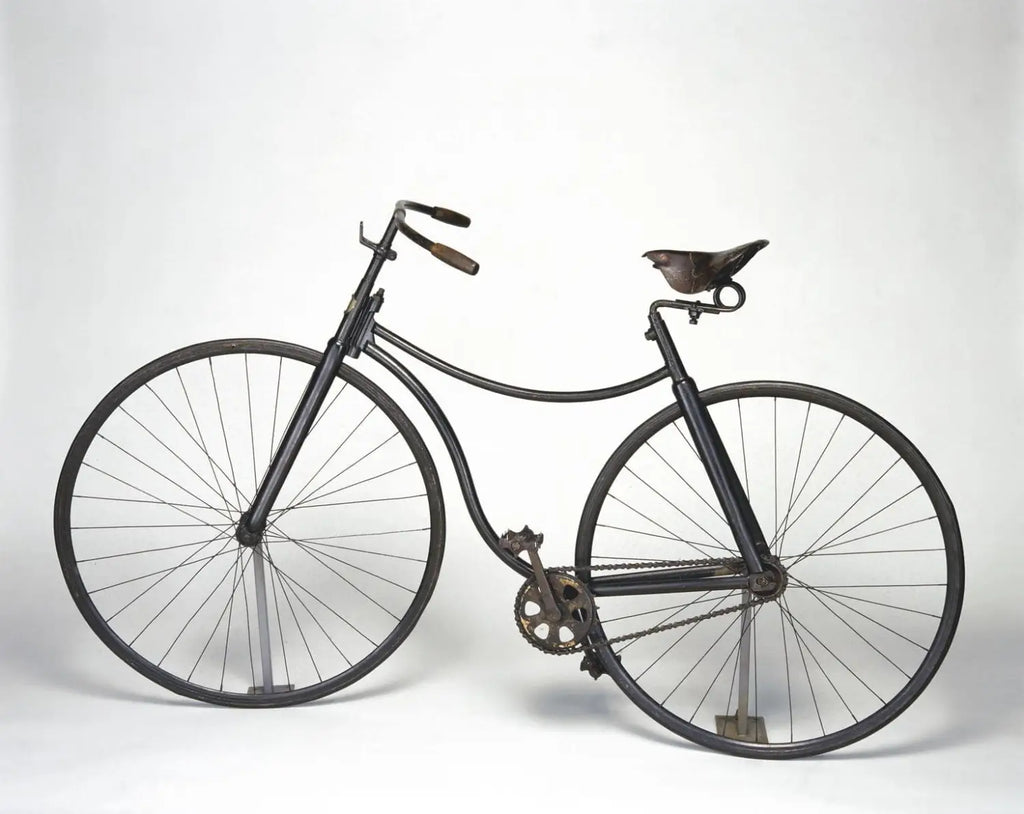
Bicycle Inventors Throughout History: Who were the people who shaped the bicycle as we know it today?

Cycling: From Draisines to Modern Bicycles
The sport of cycling has a long and interesting history. The modern bicycle was developed in the mid-1800s, and since then it has become a popular form of transportation and sport worldwide.
The first "bicycle" was invented by Baron Karl von Drais and patented in 1817. It consisted of a bar with a seat on top that one could sit on and "ride." It had no pedals, and was therefore less efficient to use than the modern bicycle. Nevertheless, the Draisine (also called a laufmaschine) became a popular toy and form of urban transport at the time.
The First Pedal Bicycle: A Milestone in Cycling
Several people played a role in the development of the modern bicycle. One of the most famous is the Frenchman and workshop owner Pierre Michaux, who, along with his father Charles Michaux, realized that the early Draisine was not very user-friendly and developed the first pedal bicycle in the mid-1800s.
The Ariel Bicycle: A Step Further in Bicycle Development
A little later, in the 1870s, the British engineer and inventor James Starley entered the scene and developed what he called the Ariel bicycle, named after the Greek god of air and sky. The Ariel bicycle was produced by Starley's company James Starley & Company and is perhaps the first bicycle company in the world.
James Starley's bicycles were known for their high quality and were the first bicycles where the frame was made of steel and equipped with pneumatic tires. In other words: rubber tires with air.
The advantages of pneumatic tires were many. They provided better comfort, cushioning, grip, and could conform to the ground in a very effective way.
James Starley died in 1881, and just three years later his company closed down. But that didn't stop the development of bicycles, and it was Starley's nephew, John Kemp Starley, who, in the late 1800s, designed the bicycle known as the Rover Safety Bicycle.
The Rover Safety Bicycle: The Bicycle that Resembles Today's Bicycles
The Rover Safety Bicycle looks almost exactly like today's bicycle and was a great success. It was produced in large quantities, exported to many countries, and became one of the most popular bicycles in the world at the time.
The Rover Safety Bicycle had two equally sized wheels, and its design allowed the rider to sit closer to the ground, similar to today's bicycles. It was also equipped with chain drive, and its design made it easy to use for both men and women.